
Real wasabi and its heat
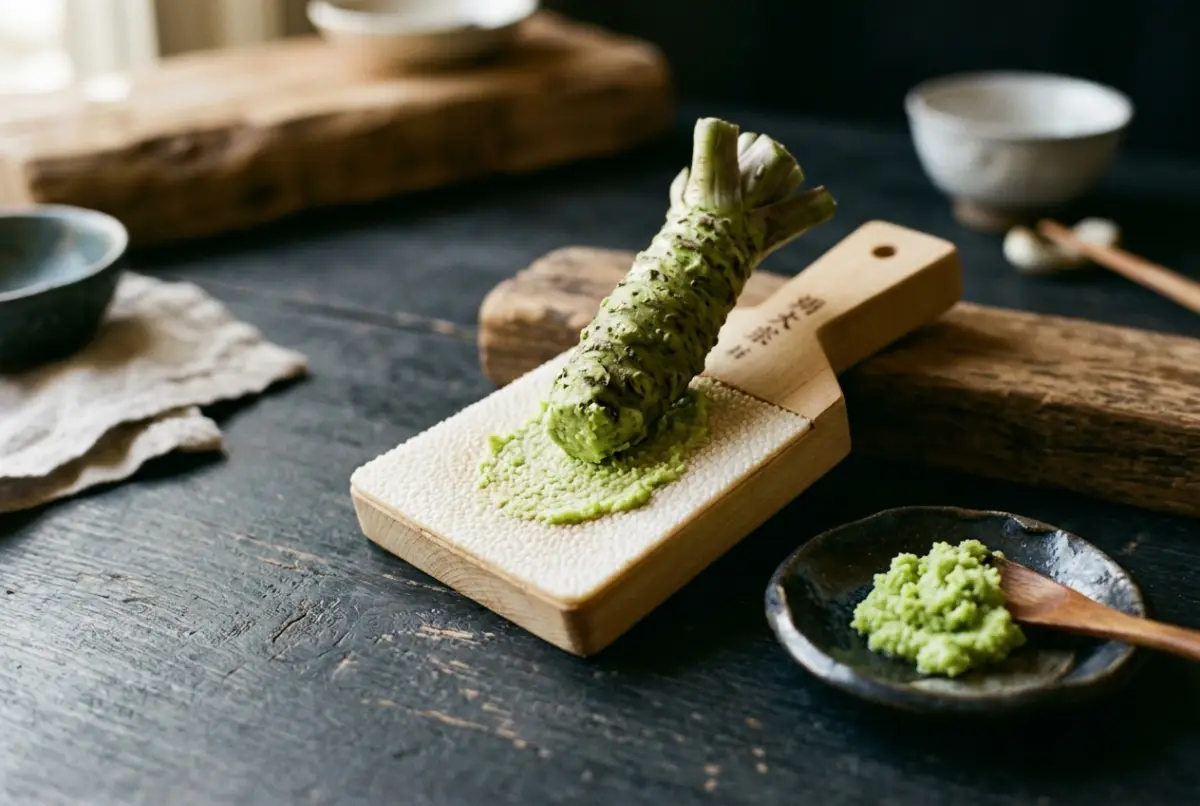
Real wasabi (Wasabia japonica, also hon-wasabi) grows in cool, running spring water and takes up to two years before the rhizome is ready to harvest. It is traditionally grated very finely on a sharkskin grater. The pungent mustard oils only form as it is grated – and they fade within about fifteen minutes.
The heat of real wasabi rises into the nose, is fresh and slightly sweet, and disappears quickly. It does not burn on the tongue like chilli; it is a completely different kind of heat.
What usually ends up on your plate
Because real wasabi is so labour-intensive, the green paste served in most restaurants around the world – and in many in Japan – is made from horseradish, mustard powder and colouring, sometimes with a small share of real wasabi. This blend is hotter, sharper and less aromatic, but it keeps well.
You can tell the difference by colour and texture: freshly grated wasabi is pale green, slightly grainy and smells vegetal. The paste is smooth, often bright green and smells more of horseradish.
Why wasabi goes with sushi
Wasabi was originally more than a seasoning. Its compounds have an antibacterial effect, which was useful with raw fish before refrigeration. Today it is mainly about flavour: it lifts the taste of the fish and brings a fresh contrast to the richness of salmon or tuna.
With nigiri, the chef often places a touch of wasabi between the rice and the fish. With sashimi, you add it yourself.
How much wasabi to use
In Japan it is considered better form not to stir wasabi into the soy sauce, but to place a small amount directly on the fish and then dip the sushi fish-side down. That way both flavours stay distinct. Start small – especially with horseradish paste, the heat quickly becomes overwhelming. With sweet varieties such as unagi or inari, wasabi is traditionally left out.
Wasabi and sushi at Han Kitchen
Wasabi’s classic partners are raw fish with plenty of character. At Han Kitchen these include salmon nigiri and maguro nigiri (2 pieces each), salmon sashimi (4 pieces) with Norwegian salmon and tekka maki (6 pieces) with tuna from Vietnam.
Whether and how wasabi comes with your sushi, and whether you would rather skip the heat, is best discussed with the team when you order. Our food is cooked by a former chef of Globus Bellevue in Zurich. Eat in at Baumackerstrasse 46 in Zurich-Oerlikon or order take-away on 077 268 20 80.
Salmon Nigiri CHF 9.00 · Maguro Nigiri (Tuna) CHF 10.00 · Salmon Sashimi (4 pieces) CHF 13.00