
Meaning and history
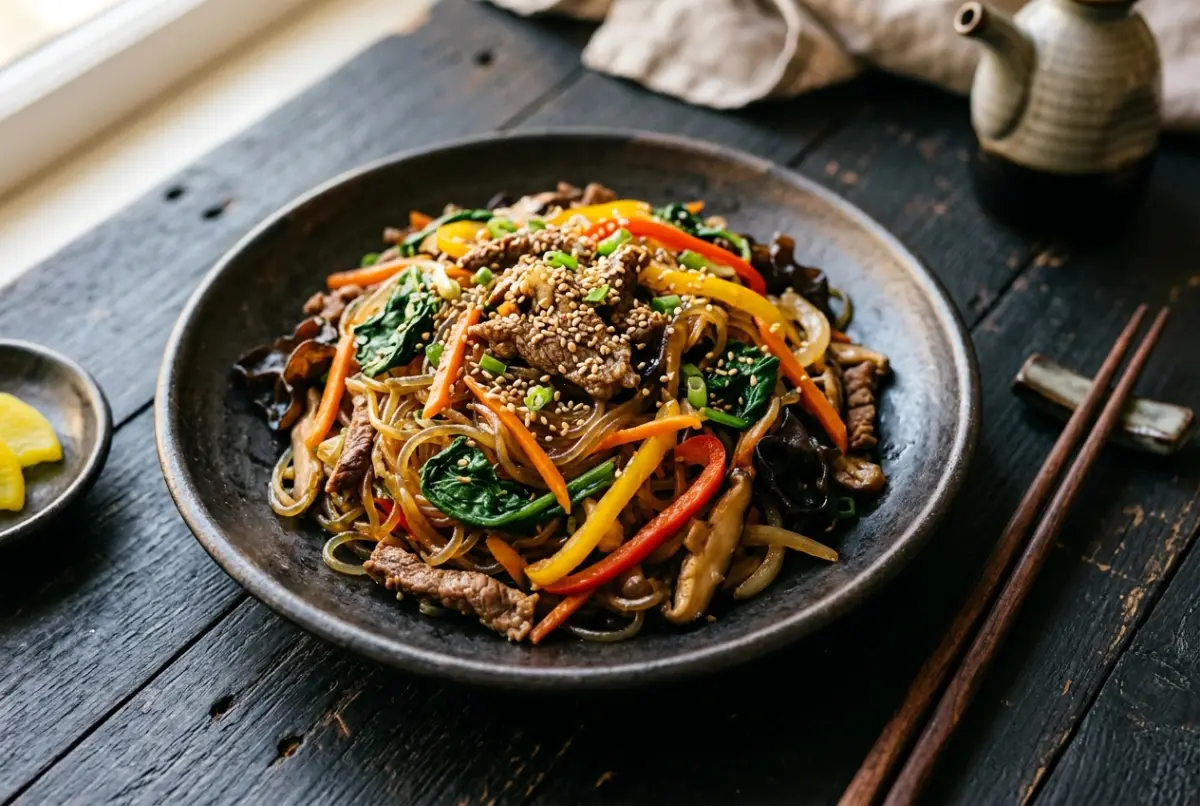
The name combines “jap” (mixed) and “chae” (vegetables), so japchae originally means “mixed vegetables”. It is recorded as being served at the Korean royal court in the early 17th century – at that time without any noodles. The signature glass noodles were only added in the 20th century, turning japchae into the dish we know today.
In Korea japchae is festive food, served at birthdays, weddings and holidays such as Chuseok, but it is also eaten every day as a side or main dish. On Swiss menus you will often see it spelt “Japche” or “Chapchae”.
The noodles: dangmyeon
The glass noodles used for japchae are called dangmyeon. Made from sweet potato starch, they are greyish-beige when dry and turn almost translucent once cooked. Compared with Chinese glass noodles made from mung bean starch, they are thicker and chewier, and they stay pleasantly elastic even after stir-frying.
Because the noodles have very little flavour of their own, they soak up the soy sauce and sesame oil particularly well.
Ingredients and preparation
Typical ingredients are spinach, carrot, onion, peppers and mushrooms, often with thin strips of beef. Traditionally each ingredient is stir-fried separately and only combined with the cooked noodles at the end, so every vegetable keeps its colour and crunch and the dish looks bright and fresh.
Japchae is not spicy. The seasoning is balanced: salty from the soy sauce, slightly sweet and nutty from the sesame. It is eaten warm or at room temperature and still tastes good the next day.
Japchae and japchae-bap
When japchae is served over rice it becomes japchae-bap, but most restaurants list it as a dish in its own right. As a classic without chilli heat, it pairs well with punchier dishes such as kimchi stew or spicy stir-fried meat.
Japchae at Han Kitchen
At Han Kitchen in Zurich-Oerlikon the dish appears on the menu as Japche (잡채): glass noodles with beef and mixed vegetables for CHF 28.90. The vegetarian Japche (야채 잡채) with glass noodles and mixed vegetables is CHF 24.90.
Japche is great for sharing and makes a mild counterpoint to spicier dishes. Enjoy it in the restaurant or phone ahead for take-away.
Japchae CHF 28.90