Akami, chutoro, otoro – the cuts of tuna
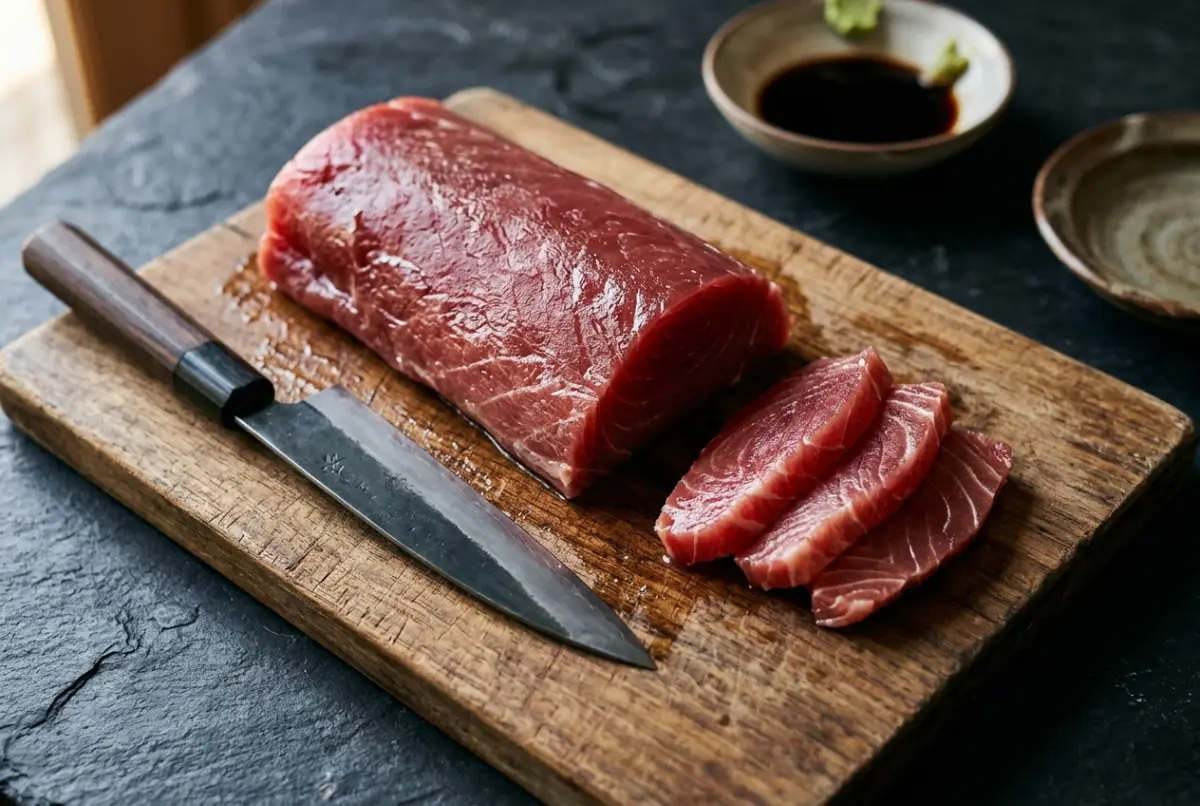
A tuna is not the same all over. The back meat, akami, is lean, deep red and full-flavoured – the tuna most people know from sushi. Towards the belly the meat becomes fattier and paler: chutoro is medium-fatty, while otoro is the especially rich, almost marbled belly cut that melts on the tongue.
Toro is rare and expensive because each fish yields only a little of it. Most tuna on sushi menus is therefore akami. Good akami has an even, vivid red colour with no brownish patches.
Maguro, tekka, tuna – which term means what?
Maguro is the general Japanese name and often appears with nigiri and sashimi. Tekka traditionally refers to tuna in rolls, which is why thin tuna rolls are called tekka maki – the name is said to come from the gambling dens (tekkaba) of the Edo period. Tuna is simply the English word that many European menus now use.
Species include bluefin (hon-maguro in Japanese), yellowfin (kihada) and bigeye (mebachi). Menus do not always say which species a restaurant uses – if in doubt, ask.
Raw, seared, cooked
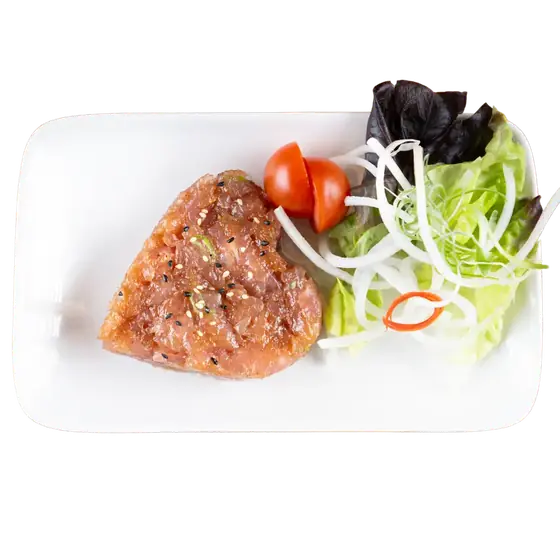
For sashimi, nigiri, maki and tartare, tuna is used raw. For tataki it is seared briefly on all sides and sliced while still raw inside. Cooked tuna, often mixed with mayonnaise, goes into many rolls – a good choice for guests who prefer to avoid raw fish. “Spicy tuna” means tuna with some heat.
Tuna and sustainability
Some tuna stocks, bluefin in particular, were heavily overfished for a long time. Yellowfin and bigeye come from different stocks and fishing grounds. If you want to eat responsibly, look for the origin and ask. A reputable restaurant will at least state the country of origin.
Tuna at Han Kitchen
Our menu lists the tuna’s origin as Vietnam. You will find it in many forms: as tuna sashimi (4 pieces), maguro nigiri (2 pieces), tekka maki (6 pieces), tuna tartare, tuna tataki (6 pieces) among the starters, in the spicy maguro roll and – cooked – in the maguro roll.
For a small tuna tasting for two, share tuna sashimi, maguro nigiri and tekka maki: the same fish on its own, on rice and wrapped in nori. Our food is cooked by a former chef of Globus Bellevue in Zurich. Eat in at Baumackerstrasse 46 in Zurich-Oerlikon or order take-away on 077 268 20 80.
Tuna Sashimi (4 pieces) CHF 14.00 · Maguro Nigiri (Tuna) CHF 10.00 · Tekka Maki (Tuna) CHF 10.00