The basics: rice, vegetables, fermentation
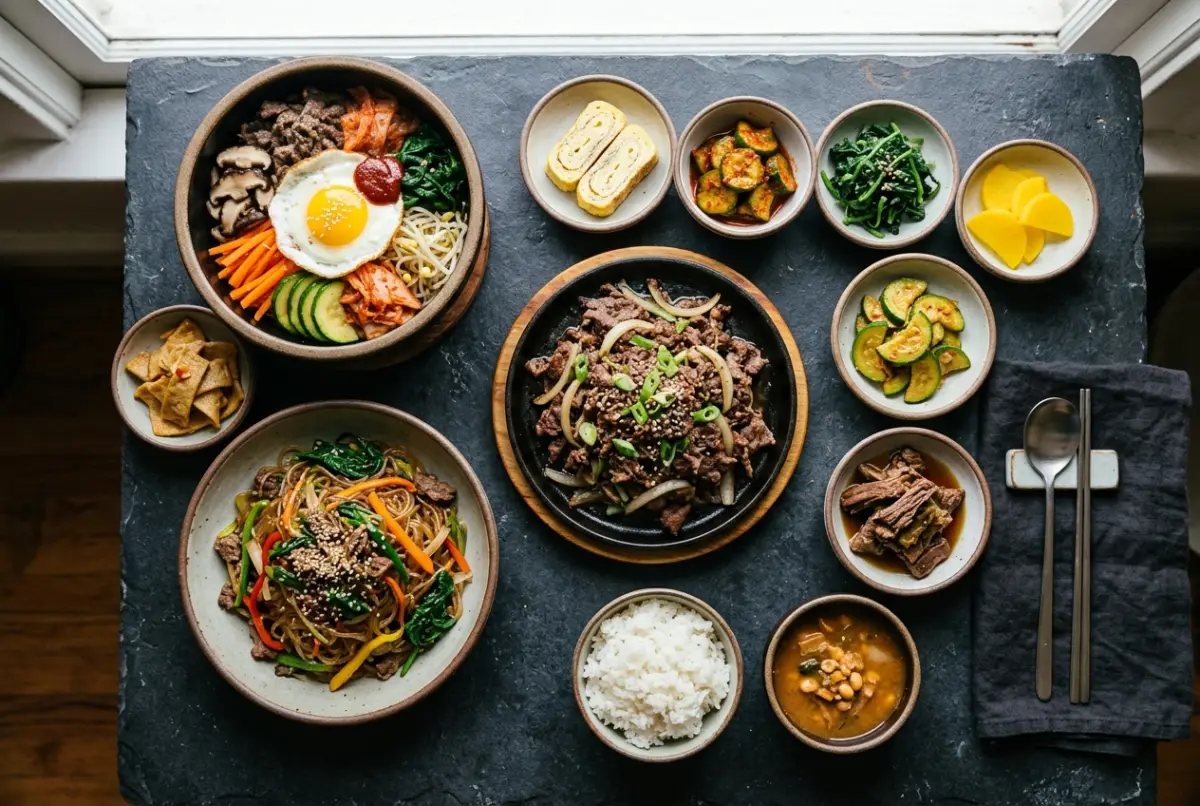
At the heart of a Korean meal is cooked rice (bap). It is joined by a soup (guk) or a stew (jjigae) and several small side dishes called banchan. This structure brings variety and balance to the table – salty, sour, spicy, mild and sweet side by side.
Fermentation is the soul of this cuisine. Kimchi, soy sauce (ganjang), soybean paste (doenjang) and chilli paste (gochujang) mature over weeks or months and give many dishes their depth. What began as a necessity for getting through harsh winters has become a culture of flavour.
Key seasonings and flavours
The most important flavours are garlic, spring onion, ginger, toasted sesame oil and seeds, and chilli in the form of flakes (gochugaru) or paste (gochujang). Many dishes are savoury and spicy, but by no means all: bulgogi and japchae, for example, are mild and slightly sweet.
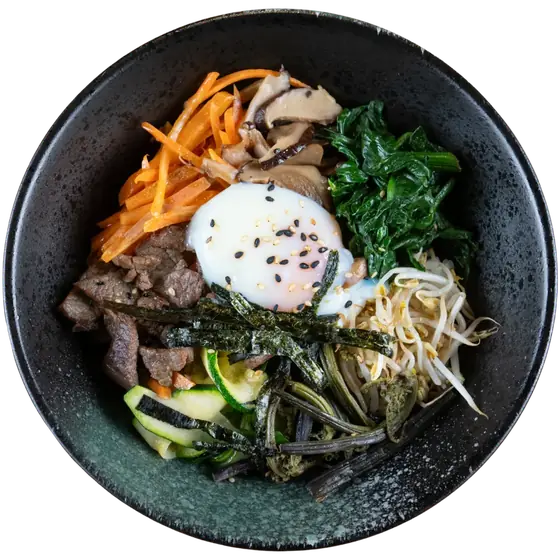
Presentation matters too. The idea of the five colours (obangsaek) – white, black, green, red and yellow – traditionally shapes how a dish is arranged, which you can see clearly in bibimbap.
The best-known Korean dishes
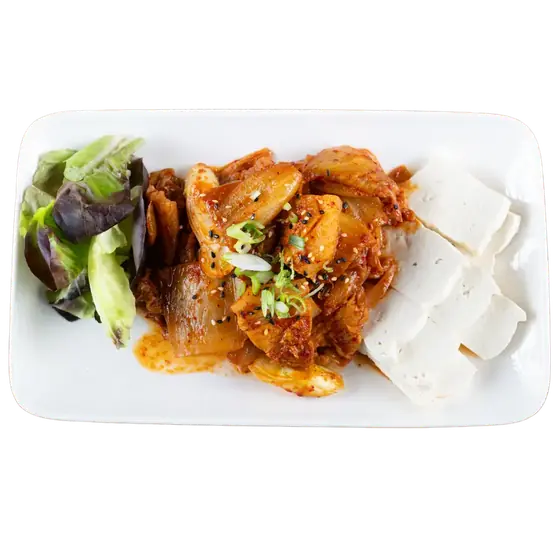
Kimchi is fermented vegetables and arguably the single most important ingredient. Bibimbap is rice with vegetables, egg and sauce, mixed together before eating. Bulgogi is beef in a sweet and savoury marinade; japchae is stir-fried glass noodles with vegetables. Kimchi jjigae is the classic kimchi stew, and jeyuk bokkeum is spicy stir-fried pork.
Korean BBQ – meat grilled at the table – is very well known abroad, but it is only one part of Korean food. Much of everyday cooking is stews, stir-fries and rice dishes.
Korean vs Japanese food
Both cuisines rely on rice, soy products and seasonality. Japanese cooking tends to be more restrained and puts the pure ingredient centre stage, as in sushi and sashimi. Korean cooking seasons more boldly, with more garlic, chilli and fermentation, and many dishes are meant for sharing.
Korean food at Han Kitchen in Zurich
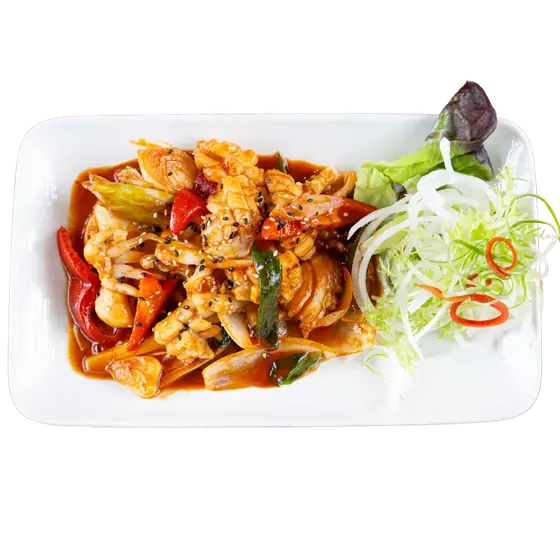
Han Kitchen in Zurich-Oerlikon brings Korean and Japanese cooking together. Our food is cooked by a former chef of Globus Bellevue in Zurich. The Korean menu features Bibimbap (CHF 32.90, vegetarian CHF 29.90), So Bulgogi (CHF 36.90), Japche (CHF 28.90, vegetarian CHF 24.90), Kimchi Jigae (CHF 32.00), Kimchi Jeyuk Bokkeum (CHF 32.90), Ojingeo Bokkeum (CHF 31.00) and the Han Kitchen Special with salmon (CHF 35.90).
We are open Tuesday to Friday 11:30–14:00 and 17:00–22:00, Saturday 17:00–22:00 and Sunday 13:00–21:00; closed on Mondays. We do not deliver – for take-away, simply call 077 268 20 80 or drop by during opening hours. Catering is available on request for larger orders and events.
Bibimbap CHF 32.90 · So Bulgogi (beef bulgogi) CHF 36.90 · Japchae CHF 28.90