What counts as banchan?
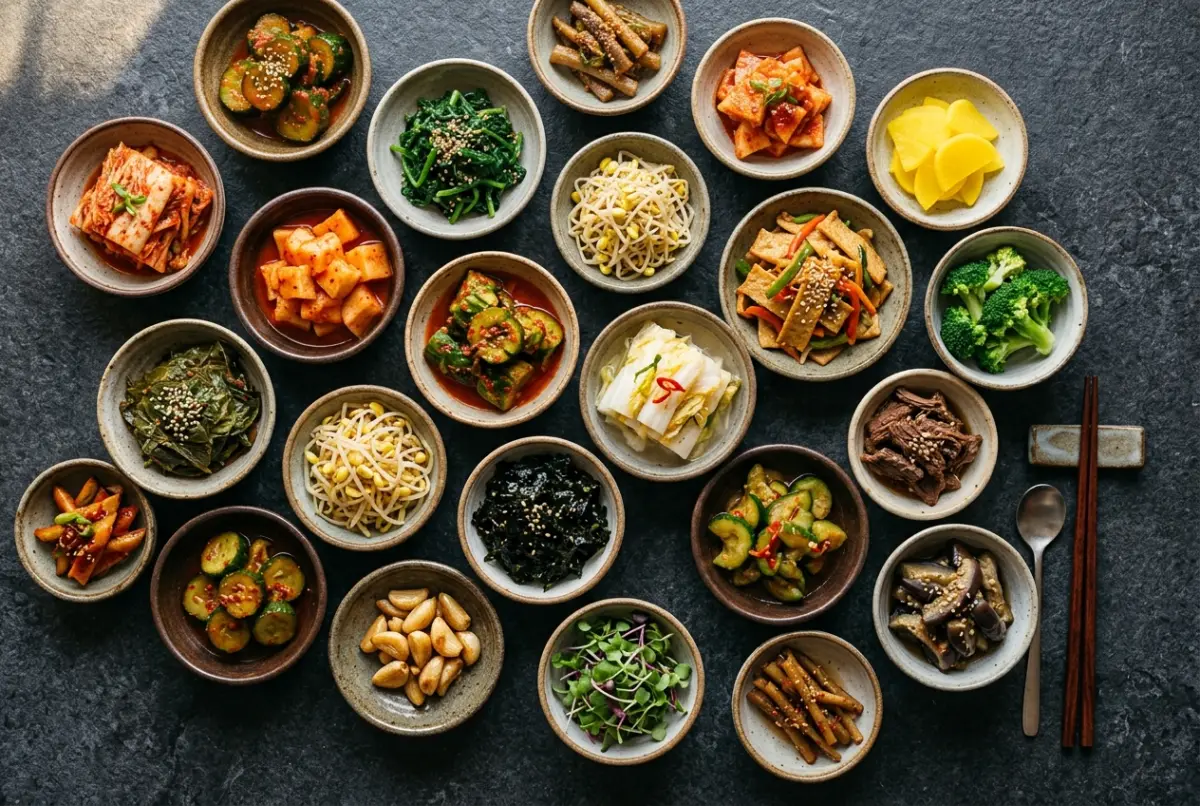
Banchan is not one particular food but a role at the table: anything served in small portions next to rice and a soup or stew. Typical examples are kimchi in its many forms, namul (blanched and seasoned vegetables such as spinach or bean sprouts), jorim (ingredients braised in soy sauce), bokkeum (quick stir-fries) and jeon (small savoury pancakes).
The selection changes with the household, the region and the season. Many banchan are prepared ahead and keep for a few days, so several little bowls are ready for every meal.
How are banchan eaten?
In Korea everyone has their own bowl of rice, the banchan sit in the middle and everybody helps themselves. You take a little at a time with your chopsticks and eat it with rice. A few simple ingredients add up to a varied meal – sour one moment, spicy or mild the next.
The number of banchan varies a great deal. At home there may be two or three; at festive meals many more. Traditional royal court cuisine is said to have served the king twelve.
Banchan in restaurants
In many restaurants in South Korea banchan arrive with the main dish without being ordered and are topped up on request. Outside Korea restaurants handle this very differently: some serve side dishes, some list them separately on the menu and some don’t offer them at all.
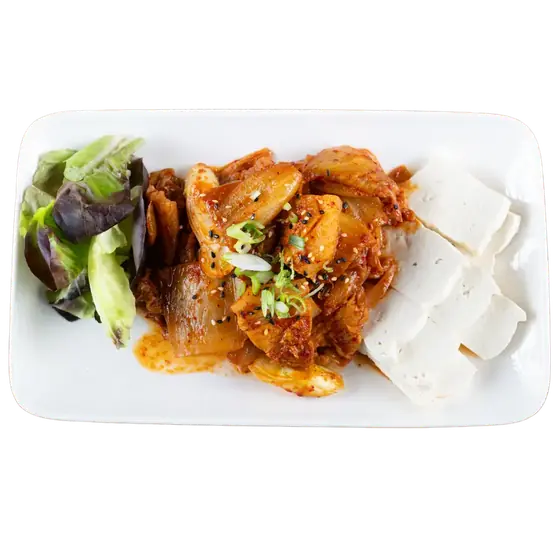
At Han Kitchen banchan are not listed as a separate item on the menu. Our staff will gladly tell you whether your dish comes with anything on the side. You will find kimchi as an ingredient in our mains: kimchi jjigae, kimchi jeyuk bokkeum and our Han Kitchen Special with salmon.
The word behind banchan
반찬 roughly translates as «something to go with rice». It shows how central rice is to Korean cooking: it is the heart of the meal and everything else accompanies it. Dishes such as bibimbap – literally «mixed rice» – follow the same logic, with vegetables and toppings going straight into the rice bowl.
Example: a Korean dinner at home
A family in Seoul sits down to dinner. Everyone has a bowl of rice; in the middle there is a pot of kimchi jjigae, a dish of kimchi, seasoned bean sprouts and stir-fried anchovies. People take turns helping themselves to the stew and the banchan. The side dishes turn a single hot dish into a complete meal.
Kimchi Jjigae CHF 32.00 · Kimchi Jeyuk Bokkeum CHF 32.90 · Han Kitchen Special CHF 35.90