
Where the name comes from
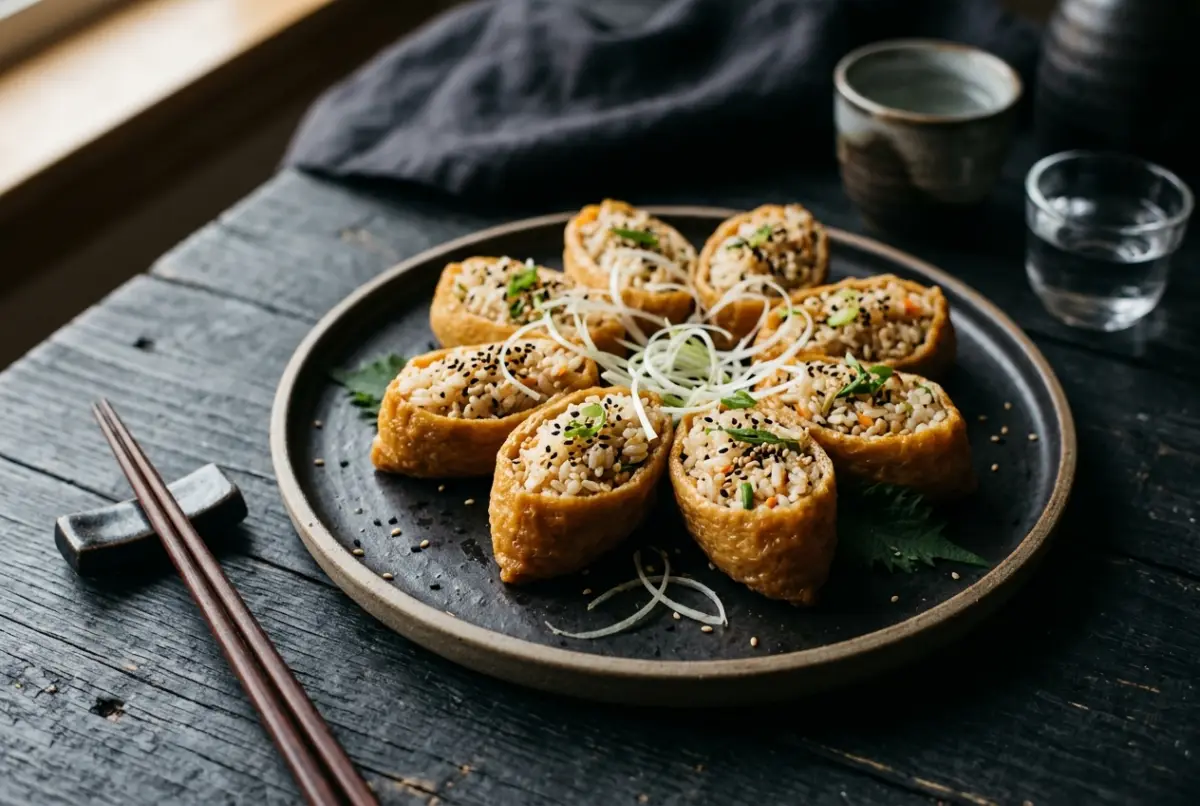
In Japan, Inari is the deity of the rice harvest, prosperity and fertility. Its messengers are foxes, and according to legend foxes love fried tofu. Worshippers therefore leave aburaage as an offering at Inari shrines – and that is how the rice-filled tofu pouch got its name.
The pointed corners of the triangular version common in western Japan are said to resemble fox ears. In the east, around Tokyo, rectangular pouches are more usual.
Flavour and texture
Inari is sweeter than most other kinds of sushi. The tofu pouch is soft, juicy and soaked in the seasoned broth, while the rice inside is gently sour. A little broth escapes when you bite into it – that is part of the experience.
Its sweetness makes inari a popular contrast to raw fish, and it is often eaten last in a sushi selection. In Japan it is also a classic picnic and bento food, as it travels well and contains no raw fish.
Is inari vegetarian?
The core ingredients – tofu, rice, soy sauce, sugar and mirin – are plant-based. However, the simmering broth is traditionally made with dashi, and classic dashi contains bonito flakes, which are fish. Many restaurants now use a vegetarian kombu-based broth instead. Whether a particular inari is vegetarian or even vegan therefore depends on the kitchen – ask if in doubt.
How to eat inari
Inari is eaten with fingers or chopsticks, usually in two bites, as the pouches are a little larger than nigiri. It hardly needs soy sauce, since the tofu is already seasoned, and wasabi is traditionally not served with it.
Inari at Han Kitchen
At Han Kitchen you will find inari in the nigiri section as “inari nigiri”, 2 pieces per portion, marked as vegetarian on the menu. If you want to skip fish altogether, pair it with avocado maki or cucumber maki, which are also marked as vegetarian.
For a fish-free sushi selection, try a portion of inari nigiri with avocado maki and cucumber maki – sweet, creamy and fresh side by side. Our food is cooked by a former chef of Globus Bellevue in Zurich. Eat in at Baumackerstrasse 46 in Zurich-Oerlikon or take away by calling 077 268 20 80. For larger orders and events, use our events & catering enquiry.
Inari Nigiri CHF 8.00 · Avocado Maki CHF 9.00 · Cucumber Maki CHF 9.00