Meaning and origin
In Korean, “bibim” means mixing and “bap” means cooked rice – hence “mixed rice”. Exactly where the dish comes from is not clearly documented. One popular explanation is that it was a way to use up leftovers: at the end of the year, remaining side dishes were mixed with rice so nothing went to waste. Other stories link bibimbap to ancestral rites, after which the offered food was shared and eaten together.
The best-known version comes from the city of Jeonju in south-west Korea, often called a capital of Korean food. Today bibimbap is one of the most famous Korean dishes in the world – not least because it is colourful, balanced and very approachable.
Typical ingredients
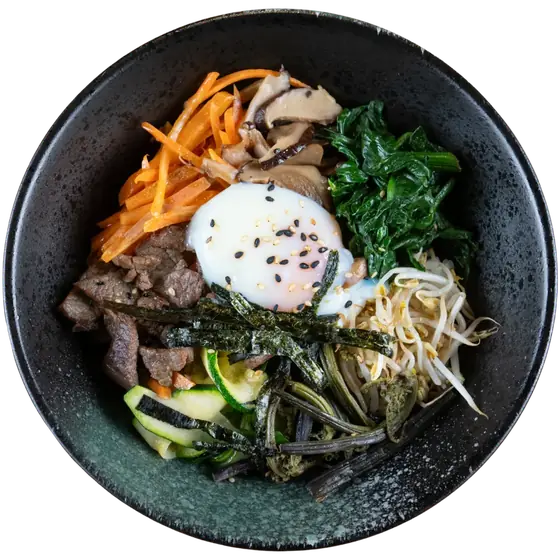
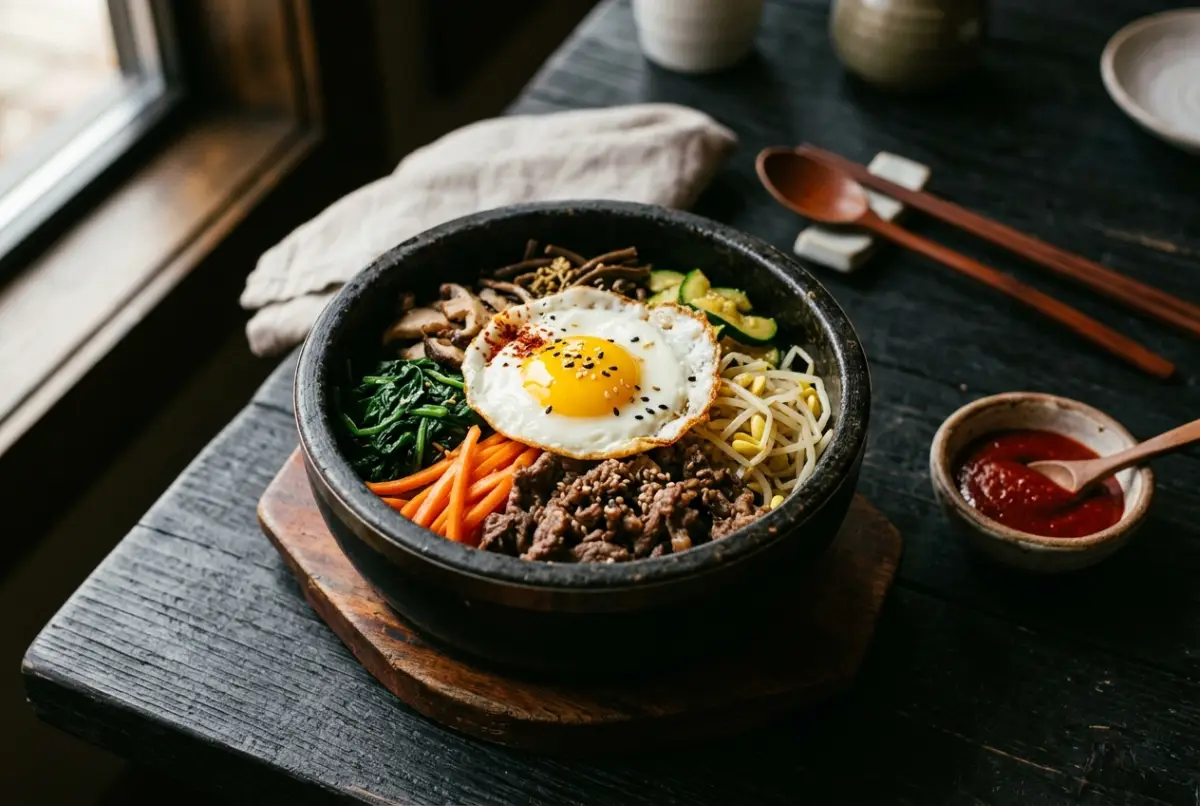
The base is always rice. On top go namul – briefly blanched or sautéed, seasoned vegetables such as spinach, bean sprouts, carrot, courgette or mushrooms. There is often a fried egg or a raw yolk, plus marinated beef. The classic seasoning is gochujang, Korea’s fermented chilli paste, with a little sesame oil, although milder soy-based sauces are common too.
The principle matters: each ingredient is cooked separately and arranged side by side, so colours and textures stay distinct until the moment of mixing. The variety of colour is no accident – the idea of a balanced, colourful bowl has long been part of Korean cooking.
Variations: dolsot and vegetarian
In dolsot bibimbap the dish is served in a scorching-hot stone bowl. The rice at the bottom turns crisp and the egg keeps cooking as you mix. Beyond that there are countless versions with seafood, raw fish or tofu.
Because the vegetables are the stars anyway, bibimbap works beautifully as a vegetarian dish: simply leave out the meat and its character stays intact.
How to eat bibimbap
Add sauce to taste, then use your spoon – in Korea rice is eaten with a spoon – to mix thoroughly from the bottom up until the rice is evenly coloured. If you prefer, you can also taste the components one by one first. Bibimbap is a complete meal in a bowl and is eaten at any time of day.
Bibimbap at Han Kitchen
At Han Kitchen in Zurich-Oerlikon, bibimbap comes with rice, beef, vegetables, a fried egg and a sauce of your choice for CHF 32.90. The meat-free Vegi Bibimbab, also with rice, vegetables, fried egg and a sauce of your choice, is CHF 29.90. According to the menu, the beef is from Switzerland.
Ask the team which sauces are available when you order. Bibimbap is available to eat in or as take-away: just call, order ahead and collect.
Bibimbap CHF 32.90