
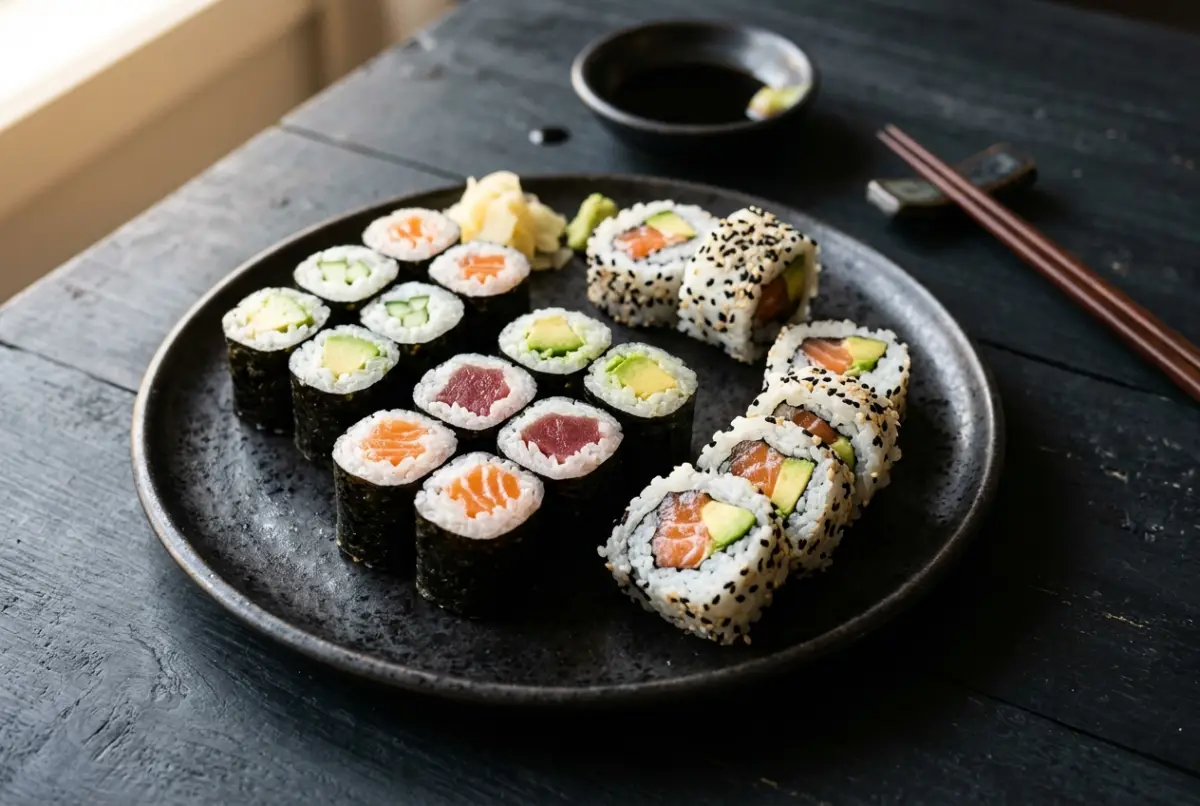
Hosomaki, futomaki, uramaki
Slim maki with a single filling are called hosomaki, “thin rolls”. They are usually made from half a sheet of nori and cut into six pieces. Futomaki are thick rolls with several fillings. Uramaki, the inside-out rolls, have the rice on the outside and the nori inside – they are especially common in Europe and North America.
If you simply order “maki” in a restaurant, you will usually get hosomaki: a ring of nori, a layer of rice and one ingredient in the centre. That clarity is exactly their appeal.
Classic fillings and their names
Many maki have set names. Tekka maki are filled with raw tuna; the name is said to come from the gambling dens (tekkaba) of the Edo period, where the rolls were a popular snack that kept fingers clean. Kappa maki contain cucumber – named after the kappa, a water spirit from Japanese folklore with a fondness for cucumbers. Sake maki are filled with salmon.
Modern combinations have joined them, such as salmon with avocado or simple avocado maki. They are less traditional, but very popular with sushi newcomers.
What makes good maki
The nori should still be slightly crisp and smell of the sea when you eat it. If maki sit too long, the seaweed draws moisture from the rice and turns chewy. That is why freshly rolled maki taste so much better than pre-packed ones from the chiller.
The rice layer should be thin and even, the filling sit right in the centre, and the roll be firm enough not to fall apart when you pick it up – without looking squashed.
How to eat maki
Maki are eaten in one bite, with chopsticks or fingers. Dip one cut side briefly into the soy sauce rather than the whole piece. Being small and easy to handle, maki are ideal for sharing and as a side to nigiri or a warm dish.
Maki at Han Kitchen
At Han Kitchen we serve classic maki wrapped in nori, 6 pieces per portion, in five varieties: avocado maki and cucumber maki (both marked as vegetarian on the menu), salmon maki, salmon and avocado maki, and tekka maki with tuna. According to the menu, the salmon is from Norway and the tuna from Vietnam.
For a mixed plate, order tekka maki and cucumber maki together – red tuna and crunchy cucumber make a lovely contrast. If you prefer the inside-out style, you will find our uramaki in portions of 4 under “Rolls”. Our food is cooked by a former chef of Globus Bellevue in Zurich. For take-away, just call 077 268 20 80 or drop by; for events and larger orders, use our events & catering enquiry.
Salmon Maki CHF 10.00 · Tekka Maki (Tuna) CHF 10.00 · Salmon & Avocado Maki CHF 10.00