
The core principles
At its heart is respect for the ingredient. Rather than masking flavours, Japanese cooking sets out to bring out the natural taste of fish, vegetables or rice. Closely tied to that is a strong focus on the seasons: whatever is in season goes on the table, and even tableware and decoration change with the calendar.
A classic meal follows the pattern «ichiju sansai» – one soup, three side dishes – plus rice and pickles. The idea is balance: different cooking methods, colours and flavours within a single meal.
Umami, dashi and the seasonings
The word umami – the fifth basic taste alongside sweet, salty, sour and bitter – comes from Japan. The chemist Kikunae Ikeda described it in 1908 while studying kombu seaweed. Umami underpins countless dishes through dashi, a light stock of kombu and bonito flakes.
Then there are the fermented seasonings: soy sauce, miso, mirin and rice vinegar. They are the building blocks of soups, glazes such as teriyaki, marinades like the one used for zukedon, and dips like the one served with gyoza.
Classic dishes
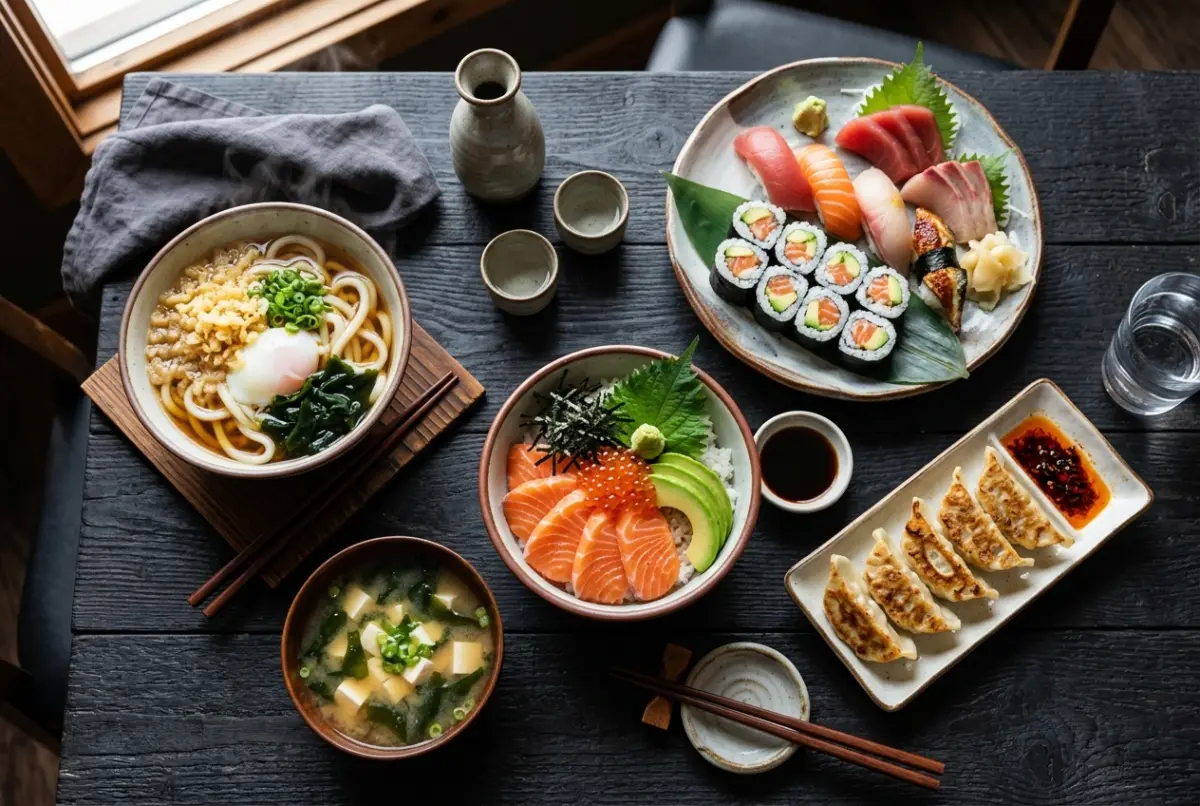
Sushi, sashimi and tataki present fish almost untouched. Donburi bring rice and topping together in a single bowl. Udon, soba and ramen are the great noodle traditions. Gyoza, yakitori and edamame are favourite small plates. Teriyaki, tempura and yakimono stand for the warm cooking methods – glazing, deep-frying and grilling.
Japanese vs Korean food
Both cuisines share rice, soybeans, fermented pastes and plenty of vegetables. Korean food, however, tends to be bolder and spicier, led by kimchi, gochujang and garlic, with small side dishes at every meal. Japanese cooking leans towards subtle seasoning and lets the ingredients speak for themselves.
Japanese food at Han Kitchen in Zurich-Oerlikon
Han Kitchen on Baumackerstrasse 46 brings Korean and Japanese cooking together on one menu. The Japanese side includes starters such as gyoza (CHF 14.50), miso soup (CHF 6.00) and tuna tataki (CHF 19.50); mains such as Salmon Donburi (CHF 28.00), Zukedon (CHF 32.00), Yagi Udon (CHF 28.00), Salmon Teriyaki (CHF 31.00) and Chef’s Choice with beef fillet (CHF 45.00); plus sashimi, rolls, maki and nigiri.
Our food is cooked by a former chef of Globus Bellevue in Zurich. Book a table, call 077 268 20 80 to order take-away, or send us an events and catering enquiry for larger orders and occasions. We do not offer delivery.
Salmon Donburi CHF 28.00 · Zukedon CHF 32.00 · Yagi Udon with Beef and Vegetables CHF 28.00