What does gochujang mean?
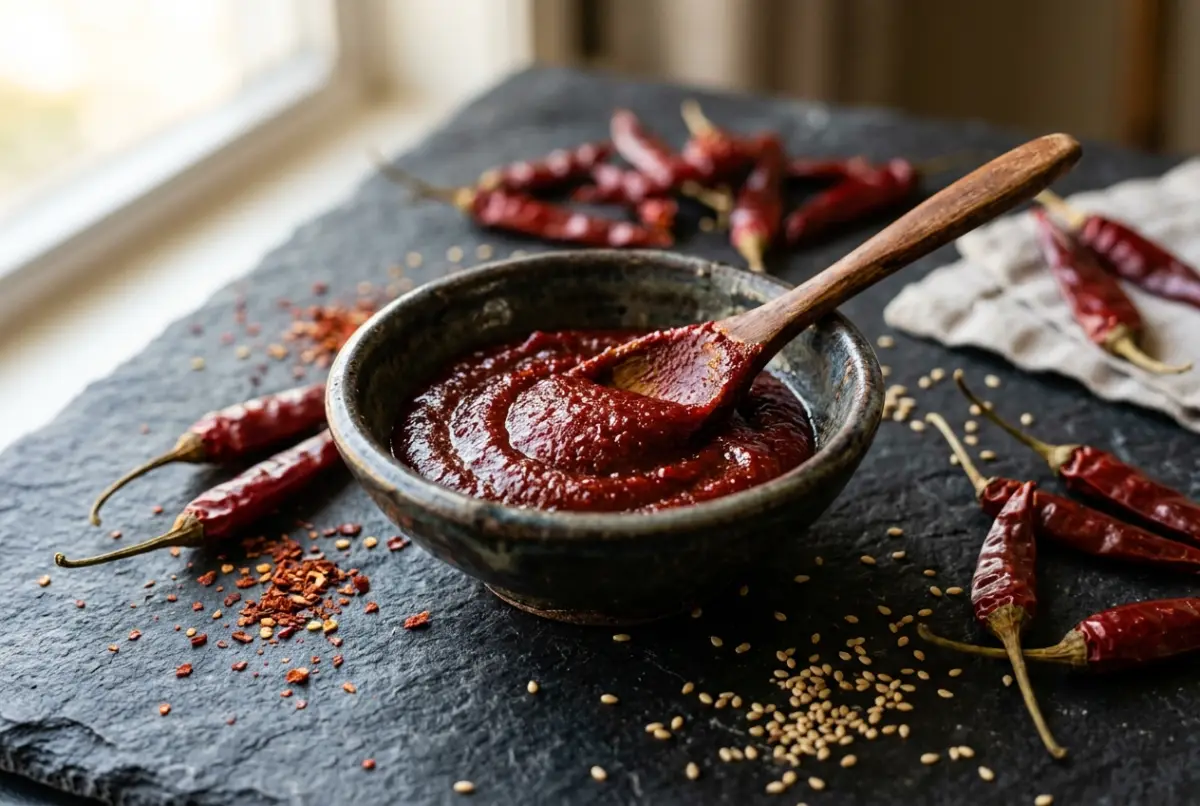
“Gochu” means chilli and “jang” refers to a fermented seasoning paste or sauce. Gochujang is one of the three great jang of Korean cooking, alongside doenjang (soybean paste) and ganjang (soy sauce). For centuries these seasonings have formed the flavour foundation of countless dishes.
Gochujang developed after chillies began to be grown in Korea from the 17th century. The region of Sunchang in the south-west is regarded as its traditional home.
How it is made
Traditionally, cooked glutinous rice is mixed with meju powder (fermented soybeans), chilli powder and salt. The paste then matures for months in earthenware jars (onggi), often outdoors. Enzymes turn starch into sugar – hence the natural sweetness – while fermentation builds the deep savoury flavour.
Commercial gochujang often contains added sugar, syrup or wheat, so if you need to avoid certain ingredients, always check the label of the specific product.
What does gochujang taste like?
Gochujang is hot, but not only hot: the sweetness of the rice and the umami of the fermented soybeans give it a round, full flavour. Depending on the product, the heat ranges from mild to very hot. On its own the paste is very intense, so in cooking it is almost always thinned or blended with other ingredients.
How is gochujang used?
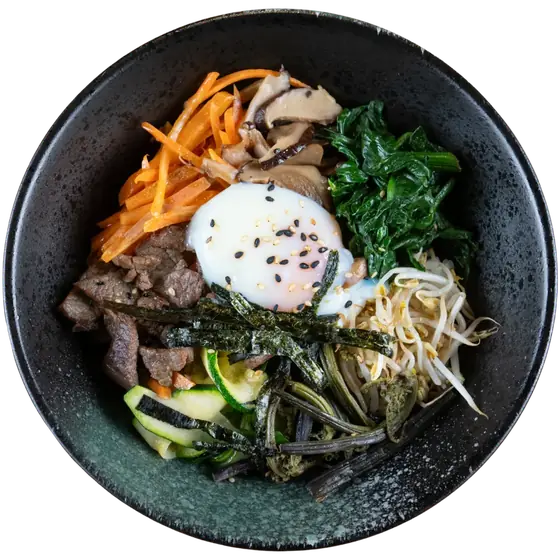
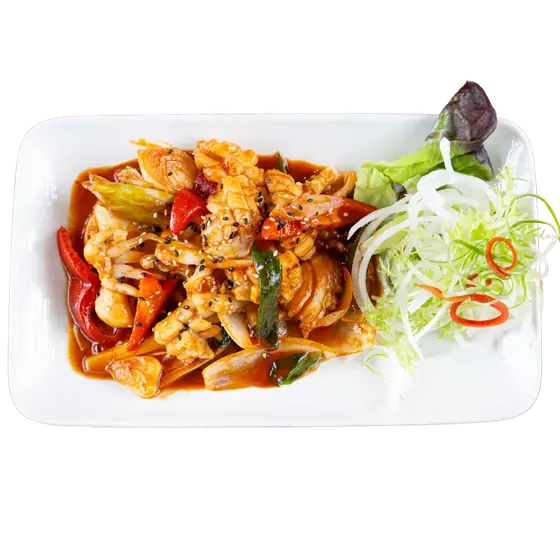
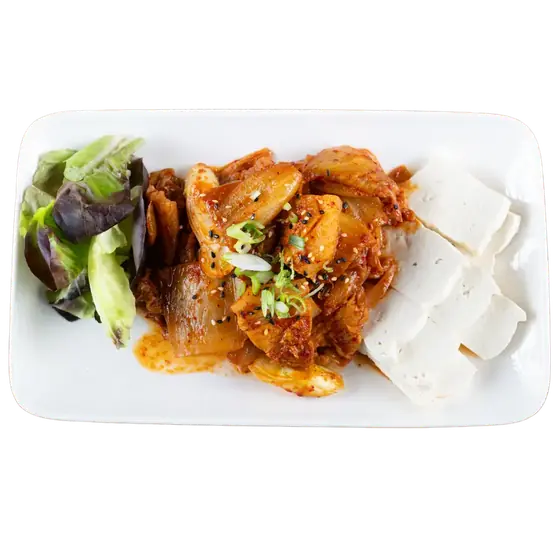
Gochujang is the classic seasoning for bibimbap, often stirred with sesame oil, a little sugar and vinegar into a sauce. It goes into marinades for spicy pork (jeyuk bokkeum), stir-fried squid, stews and tteokbokki, the spicy rice cakes. It is also popular as a dip for vegetables or for meat wrapped in lettuce – ssamjang is a blend of gochujang and doenjang.
Gochujang and the dishes at Han Kitchen
In Korea, gochujang is typical of dishes like bibimbap and spicy stir-fries. At Han Kitchen in Zurich-Oerlikon you can order bibimbap with rice, beef, vegetables, a fried egg and a sauce of your choice (CHF 32.90), as well as savoury, spicy dishes such as Ojingeo Bokkeum (CHF 31.00) and Kimchi Jeyuk Bokkeum (CHF 32.90).
Our team is happy to tell you which sauces are available and what is in them when you order – in the restaurant or on the phone if you are collecting take-away.
Bibimbap CHF 32.90 · Ojingeo Bokkeum CHF 31.00 · Kimchi Jeyuk Bokkeum CHF 32.90