What does kimchi mean?
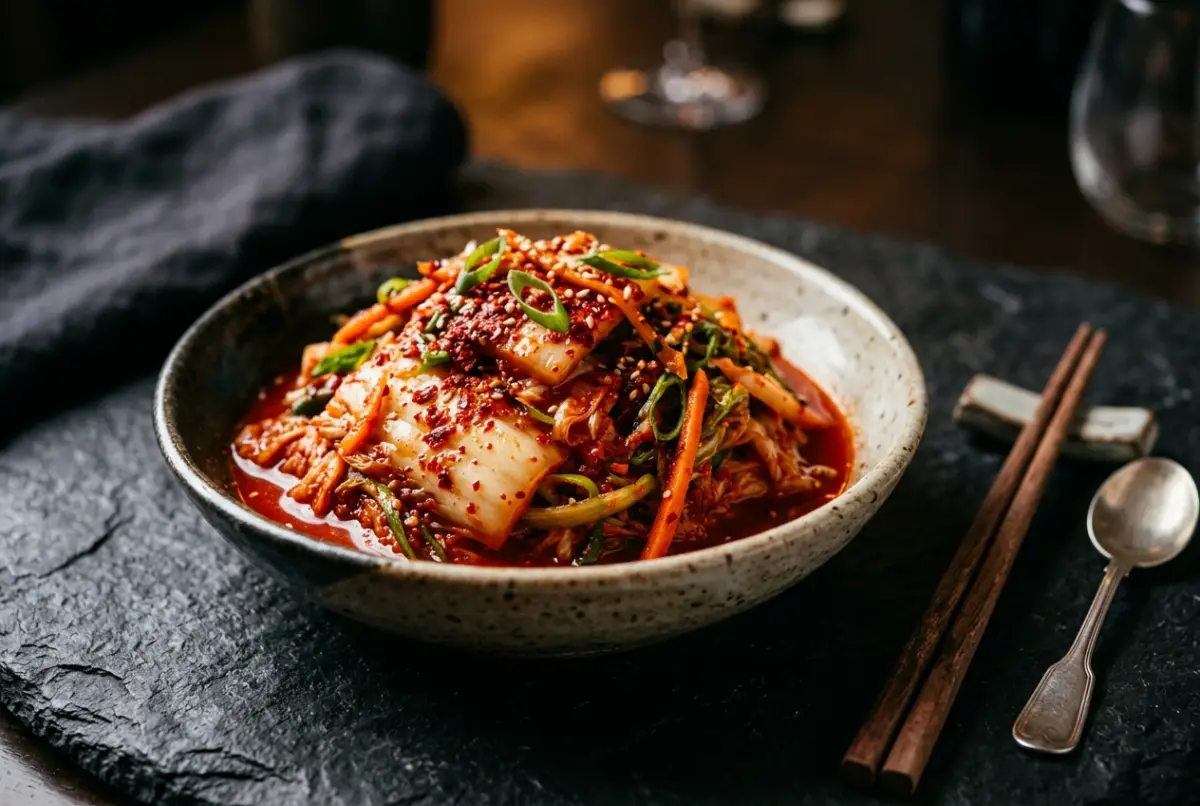
In Korea, kimchi (김치) is not one single recipe but a whole family of preserved, fermented vegetables. The principle is always the same: vegetables are salted to draw out water, coated in a seasoning paste and packed into containers. Lactic acid bacteria then turn some of the sugars into acid, which preserves the vegetables and creates the characteristic tang.
Kimchi began as a way to keep vegetables through the long Korean winter. The communal autumn tradition of making it together is called kimjang and was added to UNESCO’s list of Intangible Cultural Heritage in 2013. The red colour came later: chillies only reached Korea from the 17th century onwards, so older styles of kimchi were white or pale.
The best-known types of kimchi
Baechu kimchi, made from whole or cut napa cabbage, is what most people in Europe mean by kimchi. Other classics include kkakdugi (cubed radish), oi sobagi (stuffed cucumber), chonggak kimchi (small radishes with their leaves) and baek kimchi, a mild white version made without any chilli. Depending on the region and the family recipe, the paste may also contain fish sauce, salted shrimp, pear or glutinous rice.
Because fish sauce and shellfish are part of many traditional recipes, kimchi is not automatically vegetarian. If that matters to you, it is always worth asking how a particular kimchi was made.
What does kimchi taste like?
Fresh kimchi is crunchy, salty and spicy, almost like a punchy salad. With every week of maturing it becomes more sour, softer and more intense. Well-aged, properly sour kimchi is exactly what Korean cooks want for cooking: when it is fried or simmered, the acidity mellows and a deep, savoury, umami-like flavour develops.
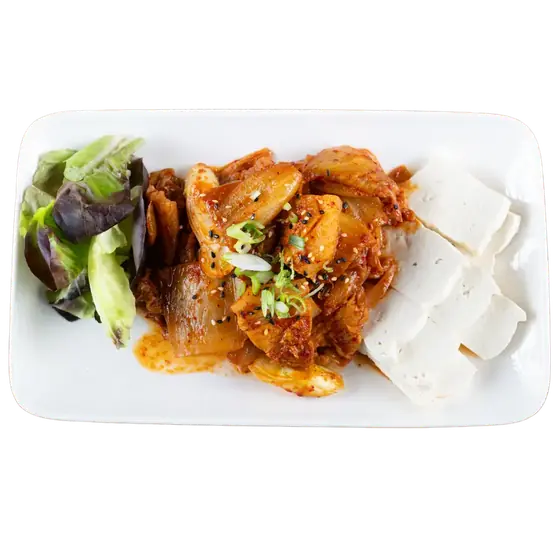
That is why kimchi turns up in so many hot dishes – in the stew kimchi jjigae, in fried rice, or stir-fried with pork in jeyuk bokkeum.
Side dish and ingredient
In Korea, kimchi appears at almost every meal as one of several small sides served with rice. It is just as important as an ingredient: cooked or fried kimchi brings acidity, heat and seasoning to a dish without the need for many other spices. Thanks to fermentation, raw kimchi contains live lactic acid bacteria; cooking removes them but keeps the flavour. Kimchi is also fairly salty, which is worth bearing in mind.
Kimchi at Han Kitchen
At Han Kitchen in Zurich-Oerlikon, kimchi takes the lead in three dishes on the menu. In Kimchi Jigae (CHF 32.00) it is simmered into a stew with pork and tofu. In Kimchi Jeyuk Bokkeum (CHF 32.90) it is stir-fried with marinated pork belly, vegetables and tofu. And the Han Kitchen Special (CHF 35.90) pairs stir-fried kimchi with fresh salmon.
All three are a good way into kimchi, because cooked kimchi tastes rounder and milder than raw. Eat in, or phone ahead for take-away and collect your order.
Kimchi Jjigae CHF 32.00 · Kimchi Jeyuk Bokkeum CHF 32.90 · Han Kitchen Special CHF 35.90