
How is miso made?
Soybeans are soaked, cooked and mashed, then mixed with salt and koji – rice, barley or soybeans inoculated with the mould Aspergillus oryzae. The mixture matures in vats for anything from a few weeks to several years. During that time the koji’s enzymes break down protein and starch into amino acids and sugars, which give miso its deep, savoury umami flavour.
The same koji mould is used in Japan to make soy sauce, sake and mirin. Miso itself has been a staple for centuries, and miso soup has been part of everyday life since the Muromachi period.
The main types of miso
Shiro miso (white miso) is matured briefly with plenty of rice koji; it is pale, mild and slightly sweet. Aka miso (red miso) is aged longer and is reddish-brown, saltier and more intense. Awase miso is a blend of the two and the everyday choice in many homes.
There are regional specialities too, such as mugi miso made with barley in Kyushu, or the almost black hatcho miso from Okazaki, made from soybeans alone and aged for up to two years.
Miso soup (miso-shiru)
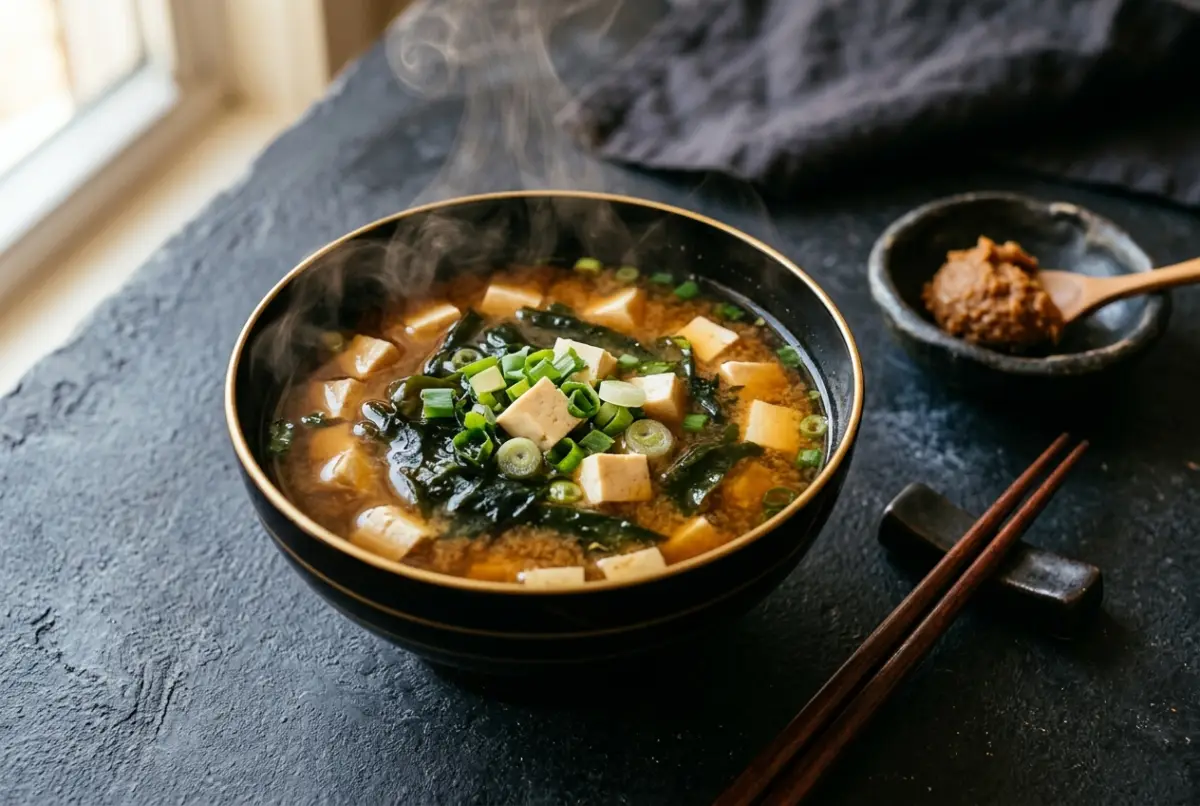
Miso’s best-known use is miso soup, miso-shiru in Japanese. It starts with dashi, a light stock usually made from kombu seaweed and bonito flakes. Ingredients such as cubes of tofu, wakame seaweed and spring onions are warmed through in it, and the miso is stirred in at the very end – it should not boil, or the aroma suffers.
In Japan miso soup accompanies almost every traditional meal, from breakfast to dinner. You drink it straight from the bowl and pick out the pieces with chopsticks.
Cooking with miso
Miso is not just for soup. It goes into marinades for fish (saikyo miso cod is a classic), dressings, dips and glazes. Korean cooking has a related, usually stronger soybean paste called doenjang. Miso contains soy and, depending on the koji, cereals too.
Miso at Han Kitchen
At Han Kitchen in Zurich-Oerlikon, miso soup is listed among the starters as «Miso shiro (Soup)» for CHF 6.00 – our most affordable starter. It is a warming opener before sushi, sashimi or a rice bowl such as salmon donburi.
Ask us in the restaurant which miso we use and what goes into the soup. Add gyoza (CHF 14.50) and edamame (CHF 7.00) and you have a small spread of starters to share. Our food is cooked by a former chef of Globus Bellevue in Zurich.
Miso soup CHF 6.00