
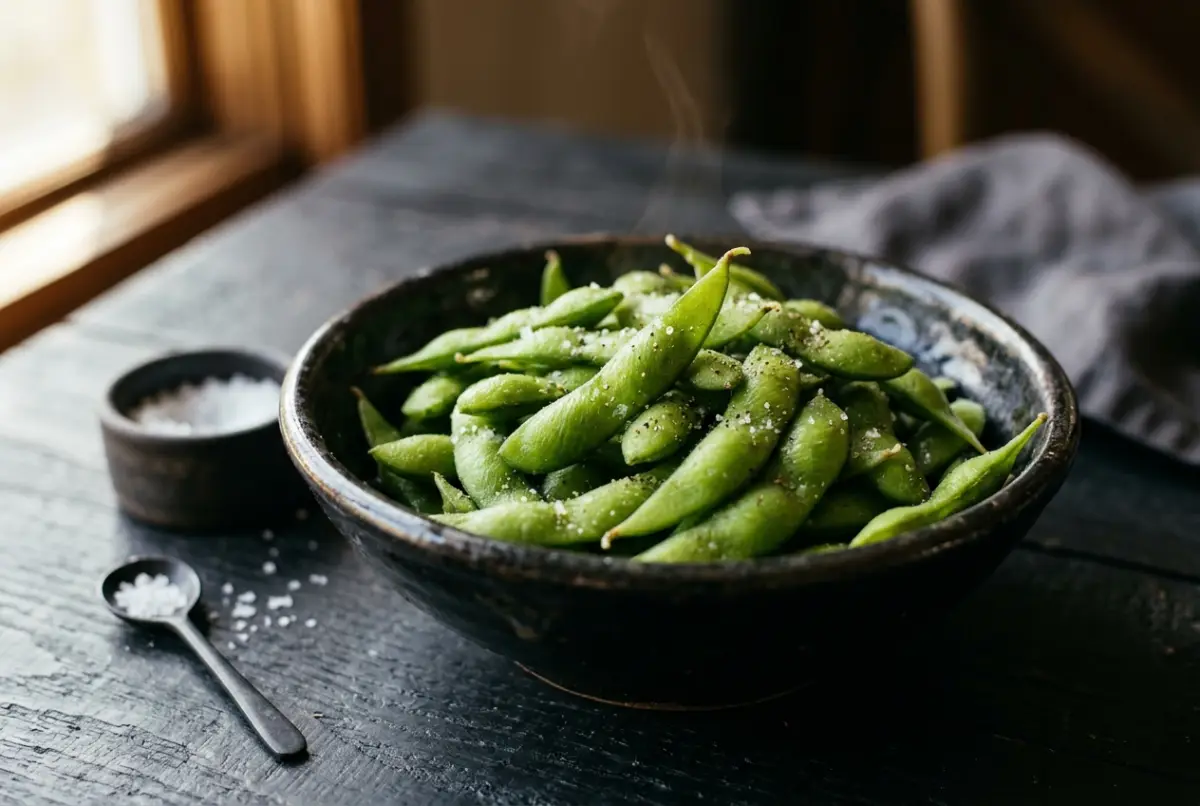
What does edamame mean?
枝豆 (edamame) literally means «branch bean», a reminder that the pods used to be sold and cooked still attached to the stem. Botanically edamame are the same plant as the soybean (Glycine max) – they are simply picked much earlier, while the beans are plump, green and tender.
Edamame vs mature soybeans
Mature soybeans are dried, hard and pale yellow; they are turned into tofu, soy milk, soy sauce or miso and need soaking before cooking. Edamame, by contrast, are used fresh or frozen, cook in a few minutes and taste mild, slightly nutty and sweet. The texture is reminiscent of young peas, only firmer.
How to cook edamame
The pods are rubbed well with salt to remove the fine fuzz and help the seasoning cling. They are then boiled in salted water for 3 to 5 minutes, until the beans are tender but still have some bite. Once drained, they get another sprinkle of coarse salt and are served warm or at room temperature.
There are plenty of variations: tossed in a pan with garlic and soy sauce, with chilli, sesame or lemon zest. Shelled edamame also turn up in salads, rice bowls and poke bowls.
Edamame in Japan: a taste of summer
In Japan fresh edamame are a high-summer crop, in season roughly from July to August, when markets often sell them still on the stem. Regional varieties are prized, such as dadacha-mame from Yamagata prefecture, known for their nutty, almost sweet flavour. Out of season edamame are sold frozen: they are blanched and frozen straight after harvest, which keeps their colour and bite.
How do you eat edamame?
The pod itself is tough and not eaten. Hold it between your fingers or teeth and squeeze the two or three beans straight into your mouth, then drop the empty pod into a separate bowl. That makes edamame a sociable finger food to nibble while you wait for your main course.
Edamame are soybeans, so they contain soy, one of the allergens that must be declared.
Edamame at Han Kitchen
At Han Kitchen in Zurich-Oerlikon, edamame (soybeans) are on the starters list for CHF 7.00. The menu marks them as vegetarian – as it does the seaweed salad (CHF 7.00) and the Japanese-style green salad (CHF 8.50).
Edamame are perfect for sharing while your main course is being prepared – for example with gyoza (CHF 14.50) or a miso soup (CHF 6.00). For larger groups and events we can also put together catering from our menu on request.
Edamame (soybeans) CHF 7.00 · Seaweed salad CHF 7.00 · Japanese-style green salad CHF 8.50